
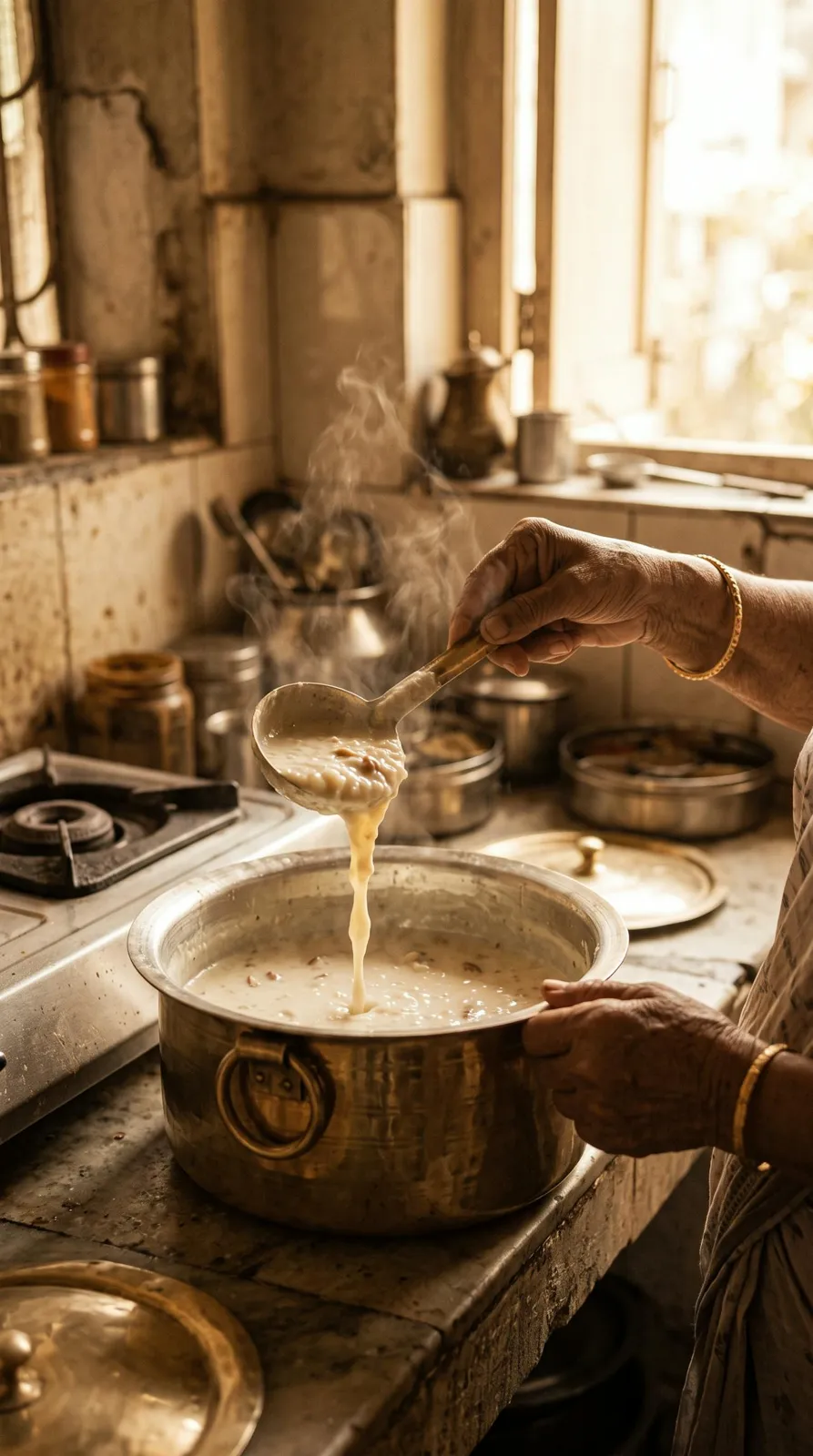
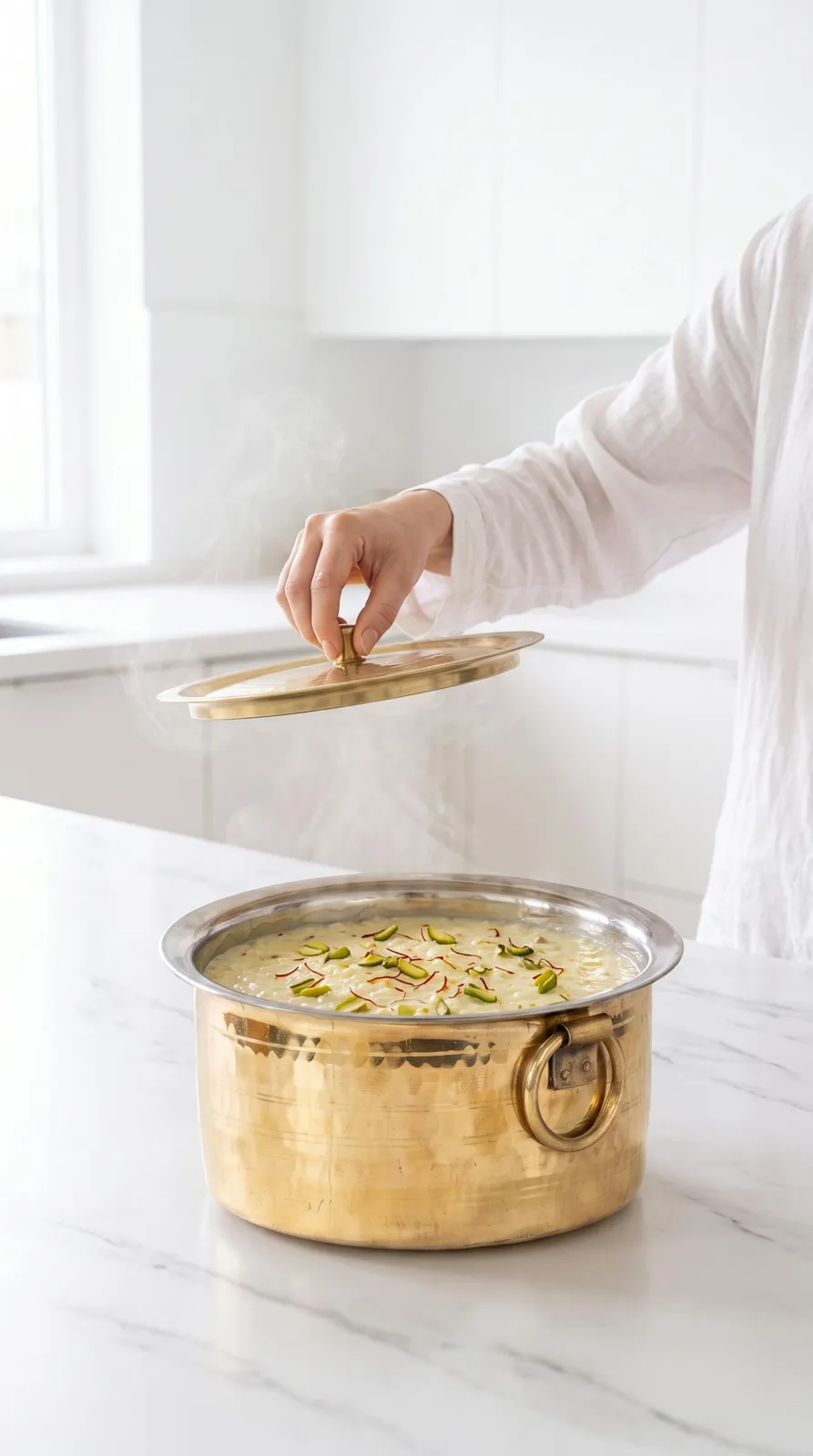
Affiliate link: if you buy, we earn a small commission at no extra cost to you.
Why it happens
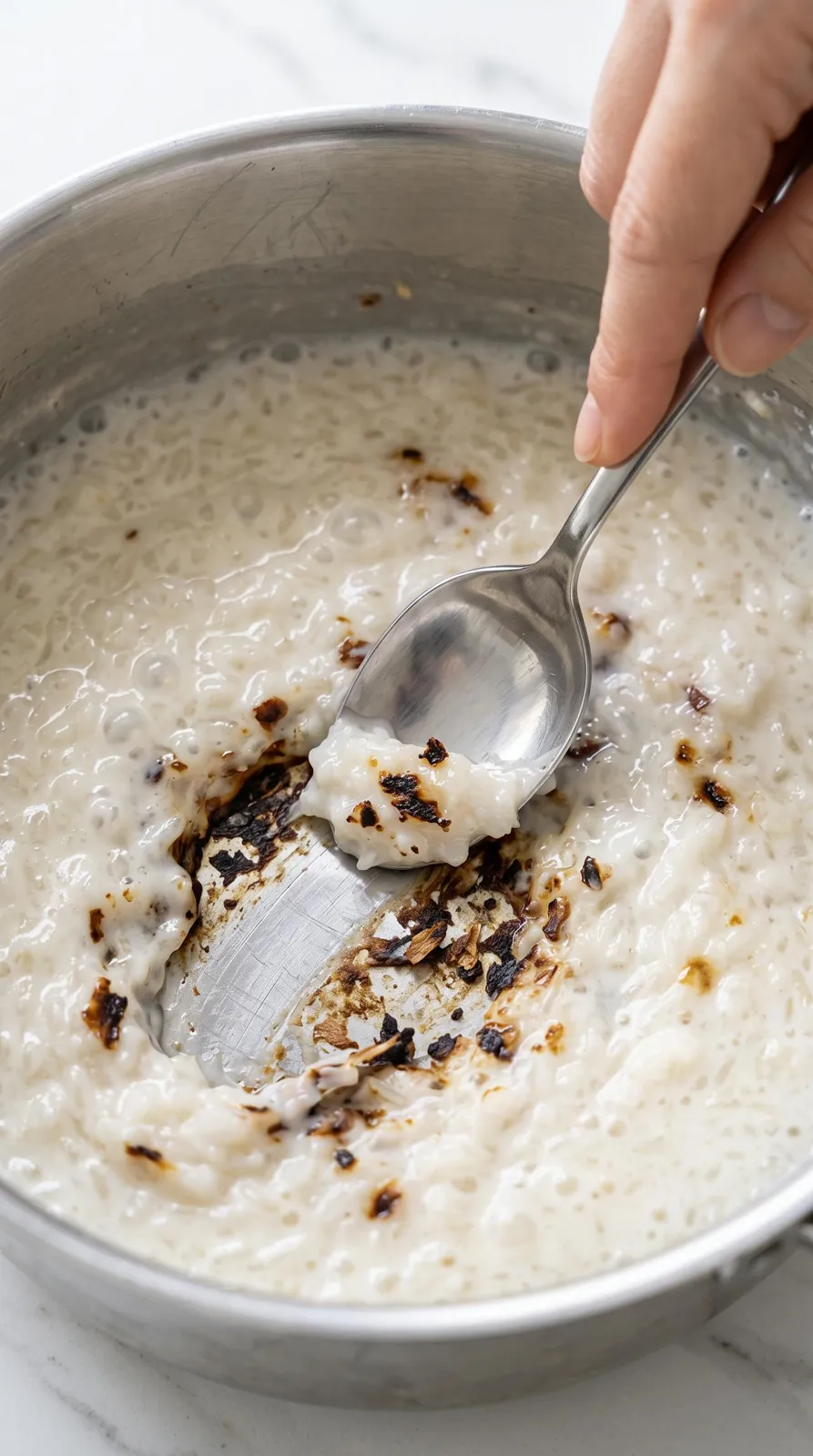
The burnt ring is a heat problem, not a you problem.
Milk solids sink and stick wherever the base gets hottest first. A thin steel base keeps the heat bunched over the flame, so a ring of kheer scorches there while the rest is still fine.
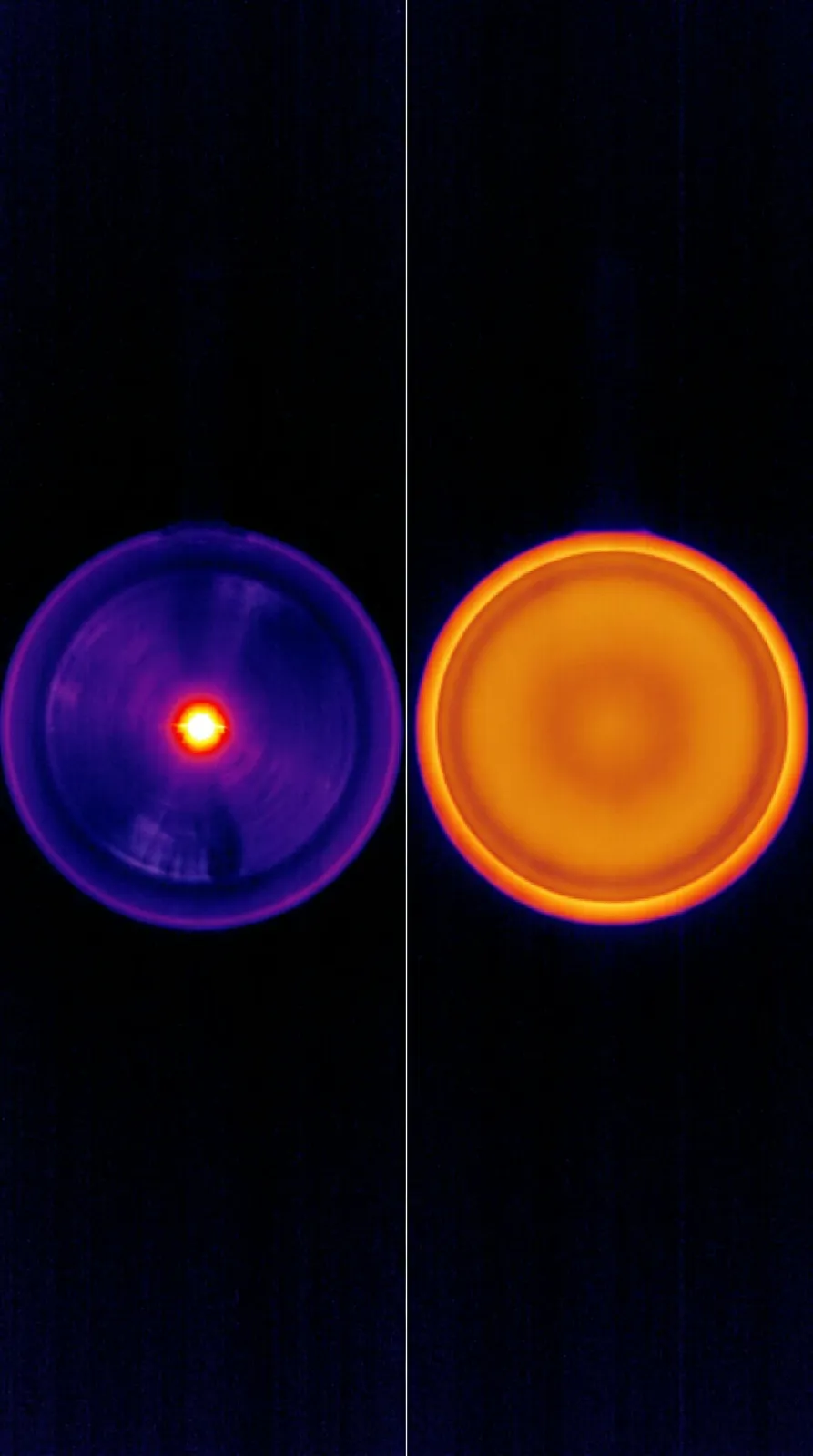
Brass moves heat about seven times faster than stainless steel (roughly 110 vs 16 W/m·K), so the whole base warms up together and no single spot races to scorching. It doesn't replace low heat and stirring, but it forgives a lot. That's why, in so many North Indian kitchens, kheer, dal and milk were made in a heavy, tin-lined (kalai) brass patila.
The recipe
Chawal ki kheer, in exact grams
Serves 4 · about 50 minutes · 3-quart pot (1 litre of milk needs room to bubble)
- Full-fat milk1 litre
- Short-grain or broken basmati rice50 g
- Sugar80 g
- Green cardamom, crushed5 pods
- Saffron, in 1 tbsp warm milk12–15 strands
- Almonds, sliced10
- Pistachios, sliced10
- Heatlow, the whole way
- Wash the rice until the water runs clear, soak it for 30 minutes, then drain.
- Bring the milk to a boil in the patila on medium heat, then turn it down to low.
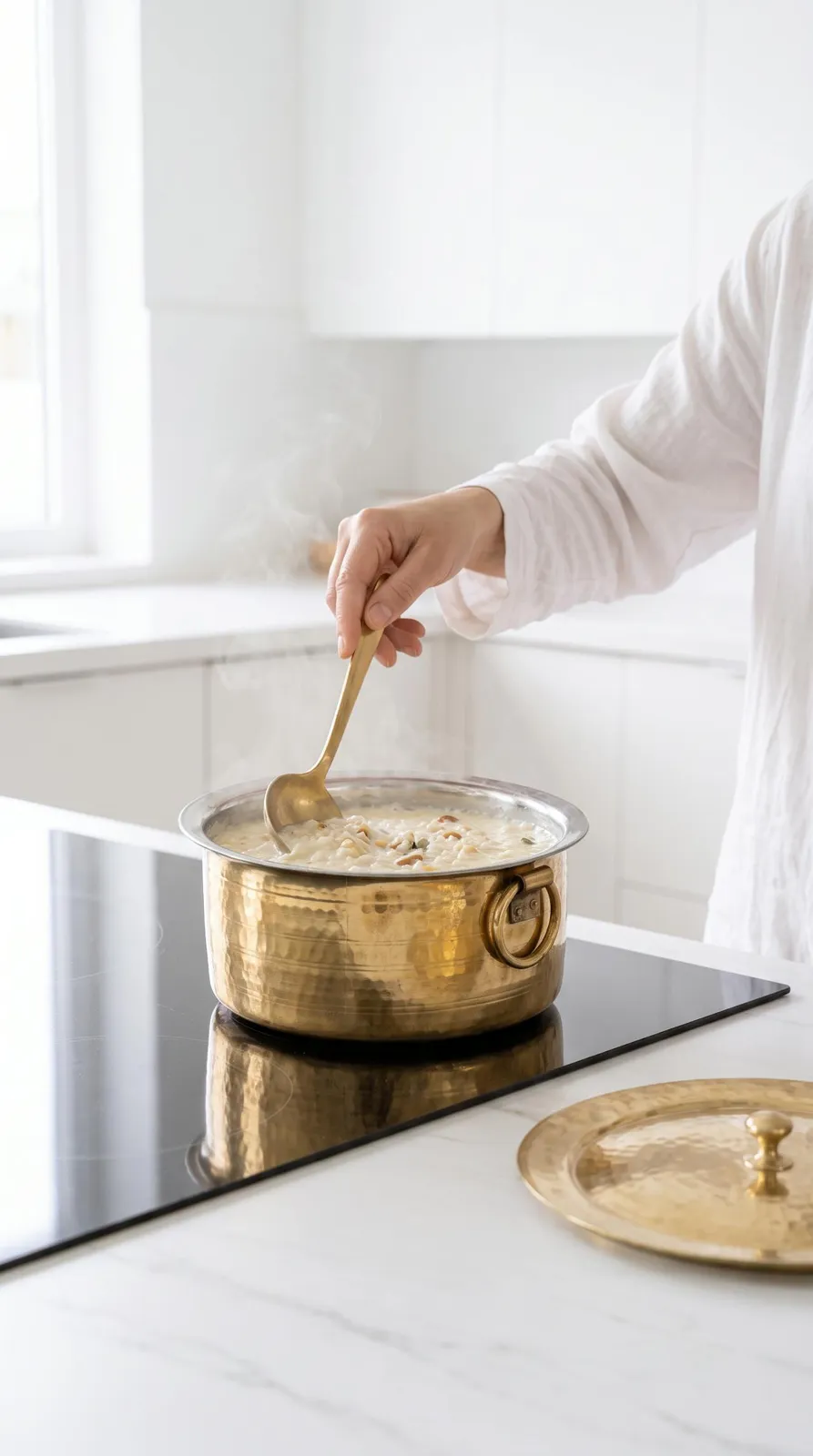
- Add the rice. Simmer uncovered on low for 35–40 minutes, stirring every 4–5 minutes and running the spoon across the base, until the rice is completely soft and the milk has reduced by about a third.
- Add the sugar and cook 5 more minutes.
- Stir in the cardamom, saffron milk and half the nuts. Switch off the heat.
- It thickens as it cools. Serve warm or chilled, topped with the rest of the nuts.
The secret
Low heat plus a base that spreads it. Rush it on high and even brass will catch. Haan ji.
Recipes disagree on sugar: 50–100 g per litre across the versions we compared. We use 80 g; go to 60 g if you like it less sweet.
The pot
What to look for
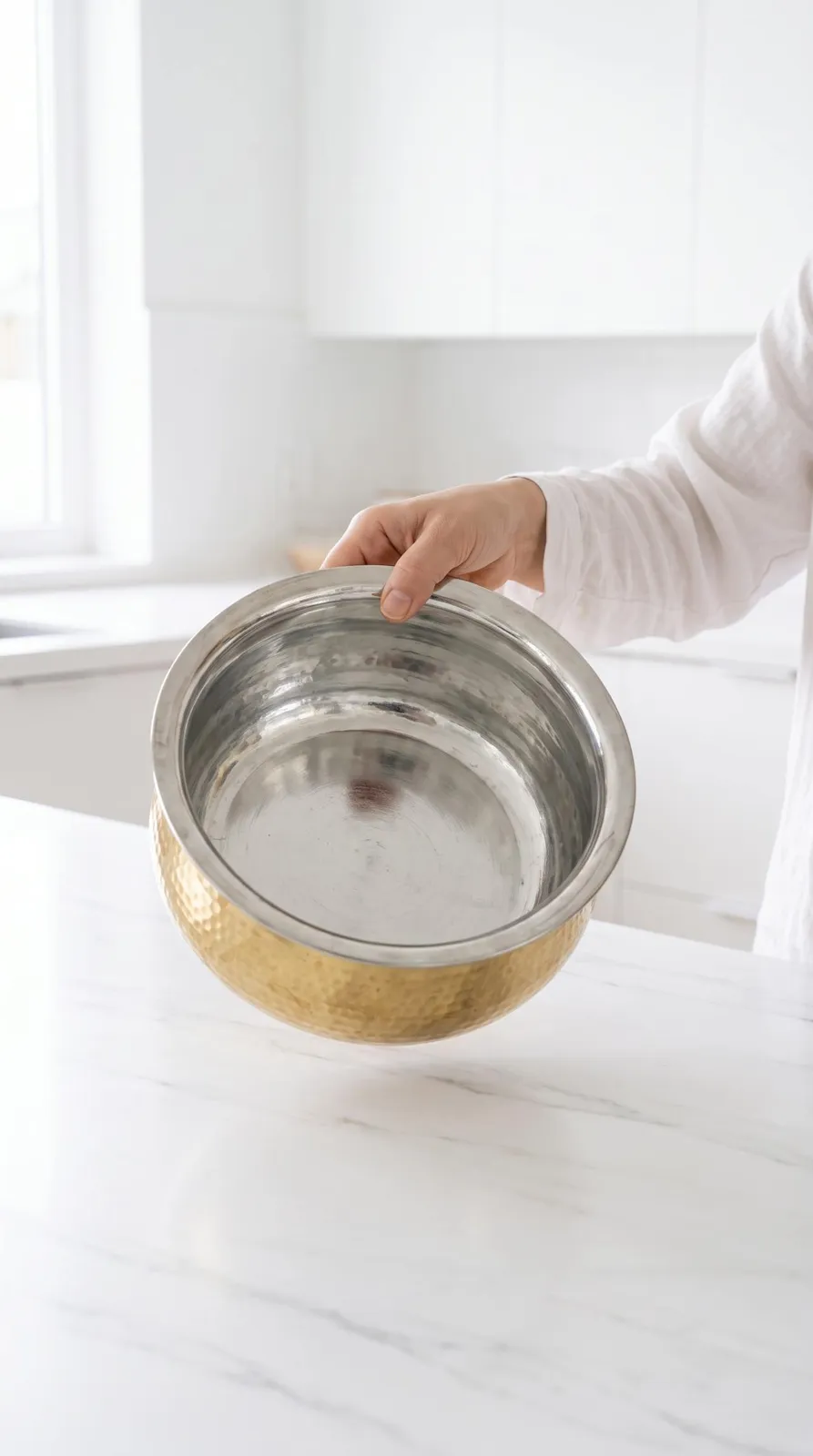
- Solid brass body: heavy and hand-hammered, so heat spreads across the whole base.
- Tin (kalai) lining inside: the silver-coloured inner layer. No synthetic non-stick coating.
- A lid: for resting the kheer and keeping a skin from forming.
Caring for kalai
- Never heat it empty or on high heat: tin melts at 232 °C (450 °F).
- Use a brass or wooden spoon, wash by hand with mild soap, and dry it straight away.
- Not induction-ready on its own. It works on gas and electric cooktops; induction needs an adapter plate.
- After years of use the lining wears thin, and it can be re-tinned.
The one we use is the hand-hammered, tin-lined brass patila from P-TAL, made by thathera craftsmen. It comes in 1, 3 and 5 qt; the 3 qt suits this recipe.
See sizes and price15% off, already applied · code ANKURSPECIALIf the discount doesn't show at checkout, type ANKURSPECIAL in the discount box. Other codes on their site can replace ours, so use whichever saves you more.